International Medical Insurance for Expatriates

Showing posts with label Expats. Show all posts

31 October 2013

Business and Lifestyle in Singapore

Singapore has a reputation for being a leading business hub in the world, as well as providing a high quality of life to expats and residents. Singapore has managed to leave a couple of years of negative growth, due to the global financial crisis, to create a prosperous country which offers many opportunities for expats in healthcare, finance, trade and technology.


The World Bank has ranked the city-state in the first position for ease of doing business. Ernst & Young found the state country to be the third of the most globalised economies among 60 of the world's largest economies according to a report by Ernst & Young (2011). There currently are more than 7,000 companies operating in Singapore, and over 100,000 expatriates working there.

One of the most remarkable aspects of Singapore is the mix of solid traditional values and modern business techniques. Let's take a look at some hints and tips for professional expats living or looking to relocate to Singapore.

Business tips
  • Singaporeans are an eclectic mix of ethnics. Companies approach to business may, therefore, differ.
  • Respect and hierarchy, as it happens in other Asian cultures, is widespread in business. For instance, junior employees do not deal with senior business partners. 
  • Decisions are always made at the top.
  • Any debates over disagreement about any decision made are held in private, never in the open.
  • It is important to maintain good personal relationships. Make sure you attend any business dinners you are invited to.
  • Harmony is sought in business meetings.
  • Check out the Ministry of Manpower for more information on business skills that may be in demand.

Lifestyle
  • When greeting people, a nod and a hand shake are the usual custom. 
  • Women need to bear in mind that a big proportion of the population comes from an Islamic background. So, fashion may be a bit more conservative than in Western countries.
  • Gift-giving is not as widespread as in other Asian cultures. Gifts are usually modest and not too personal.
  • Enjoy chili crab and their carrot cake (not the Western version at all!)
  • Singapore can be an expensive country. For example, their excellent healthcare comes with a high price tag.
  • Haji Lane is fashionista's paradise! 

Got any other tips? Please let us know!

Thank you for reading this blog.
The Medibroker Team


17 October 2013

Living a Healthy Expat Life


Living the expat life may be an exciting adventure for some, even if they have been in the country for a number of years. When expats arrive to their guest countries, everything looks and feels different, and there's usually something new to be experienced for expats who are already settled down abroad.

Living a Healthy Expat Liffe
In both cases, health issues are not uncommon. Anything from a simple cold to the anxiety of living far from family and long-term friends can happen whether you live in Singapore or in Moscow. Preparation is essential to avoid any issues. However, and despite the best preparation, health issues can definitely occur.

Here are some hints and tips to help expats make the most of their experience abroad.

Keep a positive attitude
Going away to a new country and far from your loved ones may be daunting. It is important not to dwell on the negative aspects, and highlight the positives.

Get the basics right

In our home countries, we tend to take for granted the very basics, and we know which situations to avoid. Research the country and the area where you are going to live to find out about housing, transportation, supermarkets, business hours, food prices, etc. This may not be directly related to health matters, but it will add to your peace of mind knowing your way around.

Take health precautions

Health and medical issues might not be a problem in your home country. But, going abroad comes with certain risks. Keeping your common sense is important, especially if you're going to countries which you're unfamiliar with. Some examples are:

    Living a Healthy Expat Liffe
  • Get your routine vaccinations updated;
  • Visit your doctor around eight weeks in advance before travelling to check the preventive measures that you need to take;
  • Use sun cream and insect repellent if necessary;
  • Avoid eating raw or re-heated food;
  • Avoid drinking water that has not been boiled or sanitised;
  • Make sure that you eat and sleep well.
Always travel safe

Leading a healthy lifestyle will help expats in different ways. However, all the health precautions will not prevent you from getting sick during your expat assignment. Accidents can also happen and it would only add to your peace of mind knowing that you can receive adequate treatment promptly or being evacuated if necessary. So, consider taking an international health insurance policy.

On the other hand, even the most basic treatment can be difficult to arrange abroad and can also be very expensive. Make sure that you're covered for your entire stay and before travelling to avoid any complications.

Keep in touch, but make new friends abroad

It is important to keep in regular contact with your family and friends back at home to help you avoid that loneliness feeling. Making new friends is also key to adapt to your new country. Both locals and other expats can help you learn about your new country or the new language and it will help you reduce stress.

Keep a list of contacts

It will help you find the right support when things become tough. Embassy contact information and business hours, address and phone number of a doctor and hospital, your health insurance contacts, trusted friends in your guest country, etc.


Got another tip? Please feel free to share it with us!

Thanks for reading this post.
The Medibroker Team


Photo credit
Photo credit

3 October 2013

Living and Working in South Africa


International companies have been operating in South Africa for a number of years now. The 'Rainbow Nation' is famous for its diversity, and its vibrant cities, spectacular landscape and striking differences can surprise expats. There is more to South Africa than you might expect for skilled professionals who may want to live and work there.

South Africa has been strengthening both its economy and international ties with the rest of the world ever since the abolition of apartheid. It is the wealthiest country in Africa, by African standards.

During the past two decades, many skilled South Africans have left the country to work abroad, which opens many possibilities for expats. Their most important economic sectors include IT, automotive and communications, as well as mining, banking and services.

Here are some top tips for those of you who are working in South Africa or considering relocating there to work and experience life in this country.

Business tips

  • Decisions tend to be made at the top;
  • Expect high levels of bureaucracy;
  • The level of sophistication, management style and corporate structure tend to vary enormously depending on the type of company;
  • It might be difficult to build racially and ethnically diverse teams;
  • The common business language is English, which is usually spoken to a high standard;
  • Policies to promote black talent are in force in the work place;
  • South Africans tend to stress long-term relationships;
  • A work permit in South Africa is necessary for all occupations;
  • Business code tends to be formal.


Living in South Africa

  • Do your research. South Africans expect you to have a good knowledge of the political and historical situation. 
  • Locals are fairly welcoming and there are many opportunities to meet other expats;
  • The country has no national health plans and health costs are steep. So, international health insurance is a must.
  • The cost of living in South Africa is relatively cheap. 
  • Visit the 'Dragon Mountains' or Drakensberg for spectacular views and rock art.
  • Take a wine route.  
  • Don't miss live music and their architecture.
  • Try their delicious biltong and bobotie. 


Have you got any other tips? Then, please share them with us!

Thanks for reading this post.
The Medibroker Team


Photo credit
Photo credit
Photo credit

26 September 2013

Living and Working in Japan


Living and working in the Land of the Rising Sun can be both a unique and daunting experience for expats. This beautiful country, which combines an ancient culture with Western influences, is still attracting business despite the economic crisis.

Tips to Living in Japan - Japanese Dance

Japan's location and the fact that it is an island nation have deeply marked the country's development. Around 98% of the population are ethnically Japanese, although Japan has one of the largest expat communities in the world. Around three million expats live in Japan, which makes roughly 1.9% of a total population of 128 million people.

Expatriates contribute to the third largest economy in the world by nominal GDP. The impact of the earthquake in 2011 was small and limited to certain sectors, such as agricultural produce. However, the crisis is still present, although Japan is still attracting expats who may want to do business there.

Many skilled expats work in specialist positions in the automotive sector, construction, medical or environmental technology or industrial translators. Other sectors are IT or electronics. Many other expats hold positions in the diplomatic service, foreign correspondents or have been transferred to within their own companies.

Tips to Living in Japan - Mount Fuji The local customs and the overwhelming bureaucracy can be barriers to both living and working in Japan, together with the fact that everything often works according to different, unwritten rules. Fear not! There are ways to get round these difficulties. Let's take a look at some hints and tips to help you make your stay in Japan a profitable and stress-free experience.

Working in Japan

  • Learn Japanese. It will ease your transition;
  • A heightened sense of formality is present in the business world;
  • Be aware of hierarchy in the workplace;
  • Team work, harmony, compromise and self-discipline are stressed;
  • Decisions are rarely made in a meeting;
  • Do not underestimate the importance of building relationships with both senior and junior colleagues;
  • Building contacts in the local business community is key;
  • Silence is considered a virtue. At a business meeting, silence may be used to reflect on what has been mentioned.
Living in Japan

    Tips to Living in Japan - Sushi
  • Japanese use fresh vegetables and ingredients in their cuisine;
  • A typical Japanese meal is usually made up of various smaller dishes;
  • Many kinds of Western cuisine are also popular;
  • Gift-giving is encouraged in Japanese culture and used to build up relationships both in business and in life.
  • Expats can enjoy public healthcare, but the high price tag and other aspects make it easier for expats to take out an international medical insurance policy before going to Japan.
  • Explore Japan's country side and temples.
  • Check out the ice sculpture festival in Sapporo. 
  • Visit the ancient former capital of Nara.
  • Check Naoshima's contemporary art museums.

Have you got any other tips? Please let us know!


Thank you for reading this blog post.
The Medibroker Team


Photo credit
Photo credit
Photo credit


13 September 2013

Doing Business in Argentina - Hints and Tips


Argentina offers one of the best places to live in Latin America. This may be a bold statement, but expats living in Buenos Aires or other major cities enjoy a high-quality lifestyle which is relatively cheap and safe, compared to other cities in neighbouring countries like Brazil or Uruguay.

Therere were nearly two million foreign-born people living in Argentina out of a population of over 40 million, according to the 2010 census.

Doing Business in Argentina - Hints and Tips

These may be some of the reasons why Argentina is increasing attracting big number of expats who may want to do business, as well as experiencing life there.

Here are some hints and tips. Have you got any? Feel free to add your tips!
    Doing Business in Argentina - Hints and Tips
  • Argentina is a unique market, different to other markets in Latin America;
  • Learning Spanish will open many doors in business, as well easing your integration;
  • Personal relationships play a big role in business;
  • Latin Americans tend to be sensitive to the way non-Latin Americans do business in their countries.
  • Experience the great outdoors. Argentina has a spectacular and varied landscape, such as the Patagonia (pictured).
  • Slow down! Time keeping in business may be a bit different in Argentina, which means that it may take more time there to do the same things. This doesn't necessarily mean it's bad for your business.
  • Healthcare is good across the board, but access to adequate facilities and to a high standard level of care may be too pricey for uninsured expats.
  • Try and experience the many cultural activities. Buenos Aires is well-known for its thriving night life.
  • Argentinians enjoy their food, ie, barbecued beef, meat or cheese empanadas, alfajores, etc. Their cuisine has been influenced by the diverse cultures that have made up the country over time, eg, Spanish, Italian, French, other Latin American countries, etc.

Thank you for reading this post.
The Medibroker Team


29 August 2013

Living and Working in Chile


Chile is a beautifully diverse country located on the South American West coast, which keeps attracting foreign investors and expats eager to trade in the positive business environment there. Let's take a look at some facts and tips for expats looking to live and work in Chile

The word diverse doesn't do justice to the array of different features nature has laid out in this country. It spans 4,300 Km, from the driest desert in the world to massive glacial fields, and in between expats can find beaches, geysers, lakes and volcanoes. It is no surprise that Chile considers itself the country of poets. This landscape has inspired two literary Nobel prize winners.


Despite its remote location, expats working in Chile contribute to the fifth largest South American economy. Having a reputation for economic stability, Chile has managed to survive both the global financial crisis and a series of natural disasters back in 2010. In fact, the Chilean economy grew by 5% in 2012 and has received the strongest sovereign bond rating in South America.

So, it comes as no surprise that large multinationals, such as HP or Yahoo, are present in the country. For expats looking to relocate to Chile might be beneficial to look for employment in one of these business giants or in similar institutions as a first port of call.

Working in Chile

  • Expats will need a work permit, which can only be achieved via a signed job contract.
  • Being able to speak Spanish will open the door to more employment opportunities.
  • Connections are paramount in the business environment in Chile. Convivial meetings over dinner can aid the networking process.
  • They have one of the longest working weeks in the world. Many residents put in above the 45-hour work week required by law.
  • Be prepared for everything to move a little slower in Chile than in other countries when it comes to answering e-mails and returning phone calls.


Living in Chile
  • Arriving expats do not normally report problems of culture shock.
  • Chile has one of the lowest levels of corruption in Latin America.
  • Expats will appreciate Chilean's warmth and local cuisine. 
  • Chileans lead very active life styles and enjoy interacting with friends and family. 
  • The majority of the population identifies as Catholic. Religious diversity is respected and protected.
  • The Chilean healthcare system is one of the best developed in the area, which also comes with a high price tag.
  • Tipping is customary in restaurants only. A tip in family-run restaurants will be appreciated.
  • Vegetarians will have it easier there.
  • Don't forget to try their cheese empanadas!

Have you got any tips? Your comments are warmly appreciated.


Thank you for reading this blog.
The Medibroker Team


Photo credit
Photo credit
Photo credit


22 August 2013

Expat Life in Saudi Arabia


Saudi Arabia holds a quarter of the world's oil reserves,. The wealth that comes along with oil has unsurprisingly attracted numerous multinational companies and expatriates in recent years.

Nearly 80% of the over 26 million residents concentrate in cities, being the Kingdom dominated by desert! There are roughly 5.5 million expats living in the Kingdom, most of whom are manual labourers from South East Asia. The number of Europeans and North Americans living in the country is estimated at 300,000.

Oil accounts for around 45% of the country's GDP (90% of their export gains). This is partly the reason why Saudi Arabia is one of the few high-income countries with a strong industrial sector. The tertiary sector is the second most important economy sector in the country. Power generation, telecoms and the petrochemical industry have been given particular attention in the last few years.

There are many job opportunities if expats have specific expertise and a high level of experience. Many expats work in the engineering, healthcare, IT and finance sectors. It is rare to go to Saudi Arabia without a job offer. In fact, a job offer is a pre-requisite to be given a work permit, and can only be requested by the company that sponsors expat workers. At the same time, sponsors are responsible for expats, their well-being and good behaviour.

Expat Life in Saudi Arabia

  • Islam impacts every single aspect of life and has moulded one of the most traditional societies in the world. This means that expats need to be willing to accept a new set of values, which include gender segregation in most public places and the need to dress appropriately.
  • Music and dance are important aspects of cultural life. There is a lack of cinemas and theatres in accordance to Islam, but there are festivals, such as the Al Janadryah.
  • There are opportunities to socialise with other expats.
  • There are not many religious sites in Saudi Arabia, as the form of Islam that is practised there is salafism.
Is there anything else that we haven't covered? Then, please let us know!

Thanks for reading our blog.
The Medibroker Team
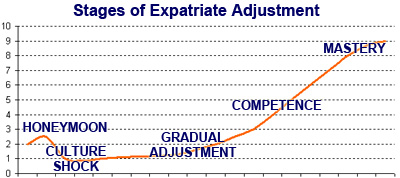

Photo credit

15 August 2013

Living and Working in Mexico as an Expat

Living and Working in Mexico as an Expat

André Breton called Mexico the surrealist country par excellence, given the modern art and culture which coexists with the Aztec pyramids and magnificent scenery. This is the contradicting impression that the growing number of expatriates in Mexico usually get when travelling from the lively cities to the peaceful countryside.

There certainly is more to Mexico than holiday areas. They country's GDP is estimated to grow by 3.5% in 2013, having grown by 3.8% last year. A high percentage of Mexico's trade falls under free trade agreements, such as NAFTA.

Despite this growth, the country still faces many challenges. There is a need for big improvements in areas such as the energy sector, healthcare and infrastructure. This may be one of the reasons why expats with specialist skills are welcome. Some of the main industries in Mexico are: oil and gas, chemicals and pharma, consumer durables, electronics and mining.

Hints and tips

Here are some hints and tips for professionals who wish to live and work in Mexico.

  1. Try and learn Spanish. It will ease your experience there.
  2. Most companies will be highly hierarchical in structure and instructions to subordinates are given in a direct manner.
  3. Personal relationships are at the heart of business dealings.
  4. Junior employees are not expected to deal with senior managers.
  5. Agendas may not always be followed at business meetings when produced.
  6. Family names are often used in business circles, as well as formal titles.
  7. It is important to dress smart both in business and social situations.
Living and Working in Mexico as as Expat
Mayan ruins of Tulum

What else to do

Mexicans like to enjoy life after working hard.

  • Festivals happen all year round, many of them being related to religion.
  • The breath taking nature is highly protected.
  • Check the pyramids, not all of them are the same.
  • Mexican music is not only mariachis!


Is there anything that you would add? Please let us know!


Thanks for reading our blog.
The Medibroker Team


Photo credit
Photo credit


8 August 2013

Tips for Professional Expats in Kenya


Tips for Professional Expats in Kenya

Kenya is a beautiful and diverse country which keeps attracting international companies, due to the work opportunities available in the oil industry and other industry sectors. Despite being a developing country, Kenya is slowly improving its prospects.

In fact, professional expats in Kenya contribute to the biggest economy in the area. In 2011, the country's economy grew by 5.1%, and its projected growth rates are around 6% in the near future.

There is a large number of expatriates working for non-profit agencies. Many expats work in big international companies, usually supplementing local labour with specialised skills. Other thriving industries are tourism and flower export. New infrastructure products may also provide opportunities for expats in Kenya.

Why live in Kenya?

Kenya has a lot to offer to professional expats. Here are some reasons to consider a move there.

  • Working in Kenya allows professional expats to participate in East Africa's economic growth. It will add new skills and reinforce your current ones. 
  • Specialised skills are welcome.
  • Good international schools.
  • It is a cosmopolitan country.
  • World-class restaurants and entertainment.
  • Kenya is a global hub for travel and a gateway to other African countries.
  • Their welcoming people, diversity and unique culture. Foodies will find something to suit their taste, such as kale stew or cornmeal mush.
  • The gorgeous landscape and national parks. 

Tips for Professional Expats in KenyaWhat to take into account?

Here are a few hints and tips to ease your move and help expats make the most of their Kenyan experience.

  • English is the official language. Swahili and Kiswahili are widely spoken.
  • There is a well-established expat community. A good place to start is the notice boards in the malls once in the country.
  • The working week is usually 45 hours.
  • The fiscal year runs from 1st January until 31st December. Taxes vary from 10% to 30%.
  • The medical standards in Kenya reveal the huge differences in population. Most expats are usually covered by their employer. However, expats are advised to check with a specialist broker before leaving for Kenya, so that they can obtain advice on the best international health cover while living there.
  • As Kenya is popular with tourists, facilities are up to Western standards.

Can you think of any others?


Thanks for reading our blog.
The Medibroker Team


Photo credit
Photo credit


25 July 2013

Self-Care Day


Healthcare is one of the main aspects that can prevent expats from making the most of their stay abroad. The stress of daily life, together with the added pressure of life in another country and culture, can affect expatriates' health badly and even lead to non-communicable (NCDs) diseases, such as cancer or diabetes.

In fact, non-communicable diseases currently lead to 63% of the annual deaths worldwide, and they are recognised as a major health challenge. Yet, NCDs are preventable through self-care. The importance of self-care is such that the International Self-Care movement launched in China in 2012 and went global this year, celebrating 24th July as the International Self-Care Day.

This movement aims at encouraging individual responsibility for health and raising awareness of the steps to achieve well-being. It also calls on public authorities to recognise the role of self-care in reducing the socio-economic burden of diseases, which is currently estimated at $30 trillion over the next 20 years.

So, looking after ourselves has become essential. Expats can avoid up to 80% of chances to have a stroke, heart disease and type-2 diabetes through self-care. Anything unexpected can still happen. But, some simple hints and tips can help you look after yourself.

  1. Think of your mental, as well as physical well-being.
    Think of self-care as a holistic concept.
  2. Enjoy those activities that can make you feel your best.
    Join a local club or any other activity that can take your mind off things and make you learn or practise a skill. Sometimes, a bit of time on your own can help you re-focus.
  3. Engage with others in your host country.
    Surround yourself with nice people. Making friends with both locals and other expats can help you feel at ease in your new country, even if you've been there for a while.
  4. Check yourself from time to time. 
    Am I eating well? Do I need a break? Avoid alcohol, cook regularly, etc. Not always easy, is it?
  5. Exercise regularly.
    Just a 10-minute walk can boost your immune system and help fighting against anything from simple colds to any NCD mentioned above. 

Although expats would still need to be covered while living and working abroad, a bit of self-care can go a long way!

Thanks for reading our blog.


18 July 2013

5 Reasons to Use a Specialist Health Insurance Broker


In the digital age, comparison websites may seem to be the best place to look for the best deal in a variety of products, such as plane tickets. Even insurers have ventured in this area, with products such as car and home insurance being available for comparison.

When it comes to private medical insurance though, comparison sites have not yet overtaken the private medical insurance sector. This week, we explain the main reasons why expats and UK residents may find easier to use a health specialist broker.

1. Ease

Using a specialist broker can make it easy for expats and UK residents. The sheer complexity of the product on offer is one of the main reasons why comparison sites do not currently provide much value in this area. 

Insurers do not have the same level of cover across the same countries. They are also likely to consider each client differently given their medical history or any that they might have pre-existing conditions. The complexities multiply even further when it comes to corporate cover and group schemes. Insurers may offer discounts and special deals to win the day. 

2. Speed

Given the wide level of choice available, finding the right private health insurance product can be time-consuming and frustrating. Since specialist brokers are used to the intricacies of private medical insurance and know the market, they are able to offer impartial, one-to-one advice based on clients' specific needs in much shorter time.

3. Customer service

Brokers place a huge importance on customer care. They do not only provide assistance to find the most suitable policy, they also offer help with paperwork as part of their service. This is specially useful when expats are based somewhere remote.

4. Less financial risk

The complexity of the product may also lead to the poor, but common decision of not buying any insurance or not taking out the most suitable policy. With the costs of healthcare on the increase globally, this would not be the best option for expats.

Take the position of a resident in any country around the world who has enjoyed free social security and is starting work abroad as an expat. They may not know the actual costs of medical treatment abroad. For example, in Hong Kong a fractured ankle can cost you £12,000. So, the search is well-worth it.

Also, it is worth pointing out that private health insurance is becoming compulsory for expatriates in some countries around the world.

5. Peace of mind

It can be hard for expats living and working away from home. Knowing that you are covered for any health related issues can ease the burden of living abroad. 

This is particularly important in the case of any unexpected events, such as road accidents, which are common in developing countries. Pollution-related health issues are also common in some countries.


Thanks for reading our blog.


11 July 2013

5 Tips to Living in Hong Kong as an Expat


Hong Kong is one of the most vibrant expat destinations at the moment. According to figures released by the Security Bureau, there was a 21% increase in the number of migrants in 2012 as compared to 2011. Many foreigners who relocate to Hong Kong do so for business reasons, mostly in its thriving banking and finance sector.

Here are five tips and things to take into account about Hong Kong, so that expats can make the most of their living and working there. Have any other tips? Then, share them with us.

  • The city is densely crowded
So, don't be annoyed if people bump into you. Hong Kong has over seven million residents living in a small space. 
  • Shortcuts
Knowing the shortcuts is vital in the rush hour or when its raining, as going from point A to point B may not be as straight forward as it may seem, according to expats currently living there.
  • The Feng Shui concept 
It is taken seriously in everything from arranging furniture to making big decisions. So take this into account in business meetings!
  • Good dining out
As most apartments are small and there are so many expats living in Honk Kong, there are many dining options ranging from traditional Chinese cuisine to Western food. Dim Sum is a speciality. Don't forget to wave your arm on the air if you want to be served in a restaurant, though.
  • Pollution levels are very high
Pollution was seen as an issue by many companies in recruiting and retaining international talent, since it can produce some health issues. In case expats need to seek medical advice, they should know that Hong Kong's standard of healthcare is excellent, but it is also the second most expensive healthcare system in the world.
  • Nature
Easy access to nature is one of the best things about Hong Kong. Go hiking to Lamma Island, Lantau or venture to Sai Kung for secluded beaches.


Thanks for reading.

Photo credit
Photo credit

4 July 2013

Tips to Fight Culture Shock


Culture shock is one of the most common issues expats experience when they relocate. This obviously varies from person to person, but also according to a number of other variables, such as guest country, knowledge of the new culture, work and living conditions, etc. To help with this, we give a few hints and tips below which might be useful for expatriates and professionals.


What is culture shock?

It can be defined as the difficulties in adjusting to a different country and culture. All expats experience cultural shock to some extent, although not everyone goes through it in the same way. In fact, it is possible to experience it more than once.

  • Some expats struggle during their first few weeks, until they start getting an understanding of their host country, make friends and start to settle down.
  • For some others, the emotional roller coaster is greater after they stop finding everything fascinating and wonderful. That's when adjustment problems arise, such as language issues, loneliness, etc.
  • Other expats have only experienced this after relocating several times to different countries, which might be surprising. 

What are the symptoms?

Loneliness, avoiding others, refusal to learn the language, having negative judgement and stereotypes about guest country, continuous health worries, concerns about being exploited or injured, etc.

Have you ever experienced any of this?

At a corporate level, the expatriate the rate of expats that cannot overcome culture shock is extremely high. Some sources quote a 40% rate.

Hints and tips

So, as culture shock can turn every cultural transition into a real struggle for expats, let's take a look at a few hints and tips to help you fight it back. Please feel free to share any other tips that might be useful to others!

  1. Get the basics right.
    Before you relocate, find out as much as you can about your guest culture, the area where you are going to live, means of transport, business hours, any supermarkets nearby, etc.
  2. Meet new people.
    It can be tiresome and frustrating. You have your friends and family back at home, but it is useful and fun having someone to talk to from time to time.
  3. Don't avoid locals.
    Locals can be as afraid of getting it wrong as you might be! Local can help you adjust quicker and in a more fun way.
  4. Learn the new language.
    It'll always be easier if you learn the local language, even if it's just to get by. Locals will be more appreciative and it'll be more satisfying for you.
  5. Keep in regular touch with your family and friends back at home.
    This can help you with being less lonely.
  6. Take care of yourself.
    Exercise regularly, eat well, enjoy as much as you can and smile a lot.
  7. Give yourself time to adjust.
    The emotional roller coaster that expatriates experience is normal. It takes some time and effort to adjust to a new country and culture. So, be patient with yourself! 


Thanks for reading!

Photo credit
Photo credit


28 June 2013

Living in Shanghai as a Professional Expat


Although cities like Hong Kong and Beijing seem to take the limelight, Shanghai is quickly becoming a leading international centre, attracting so many expats in recent times. In fact, it is considered to be mainland China's nightlife capital. According to Chinese officials, there was a 6.7% increase in the number of foreign residents at the end of 2012.

Companies would certainly brief professionals before their move. But, expats may still find it an exciting and, even, daunting experience. Here are some tips to help expatriates when relocating to Shanghai.


  • Learn Mandarin.
    While most businesses have English-speaking staff, it goes without saying that learning Mandarin or the local dialect will ease your stay in Shanghai and allow you to settle quicker.
  • Hierarchy in the workplace.
    Respect and relationship building, which they call guanxi, is more important in China than in Western countries. Many businesses operate a very hierarchical system.
  • Take many business cards.Don't be surprised if the locals exchange business cards at lightning speed even before they shake hands at a meeting.
  • Wheather.
    Humidity in Shanghai can be as high as 90%, whilst temperatures from late June to September can rise to 35C.

    In winter time, warm clothes are a must. Temperatures can be chilly and reminiscent of the cold winters in Central Europe. However, temperatures from May until the first weeks in June and in autumn are the best in the year.
  • Food and drink.
    It is advisable to drink boiled or bottled water, and to avoid unwashed food items, especially in the summertime.
  • Health and wellbeing.
    Pneumonia and influenza are common problems in winter, especially as houses and offices are badly insulated. Also, expats should have their immunisations are up-to-date before travelling.
    In the event that expats needed any medical attention, language and costs can be a problem.

    Although there are English-speaking staff in local hospitals, local expats have reported big language barriers. Also, doctor's fees and medication are charged separately, even at the foreign clinics, where out-patient services are charged at a higher price than the ordinary surgeries. Hence, the importance of seeking advice on international medical insurance.

    Also, it is interesting to know that an introduction to the right doctor in China can save time. especially if it is a referral from a Western clinic.
  • Tipping
    Tipping is not customary in China, and tips are often not accepted. But, the idea is catching on. Fine dining restaurants and international hotels, might add a percentage to the total bill, though.

Have you got any tips or share any experiences?

Thank you for reading.

20 June 2013

5 Top Tips for Professional Expats

Today's professional expats focus on living an experience in their guest country, unlike other . Since relocating to a new country may not be the easiest thing to do, we thought we might list a few hints and tips to ease the strain of moving away from friends and family.
generations of expats

Got any others? Please feel free to add them to the list by commenting on this post.

  • Try and learn the local language.
    Learning the local language before relocating can save expats some time and ease their settling in that country. Locals usually appreciate foreigners' efforts to speak their language beyond 'please' or 'thank you'.
  • Be curious.
    Learn about the history of the country you are staying anything that can make your stay easier, such as dress code or observe how locals interact, etc.
  • Research, research, research.
    OK, so your job takes you to Dubai, with so many luxury hotels, tax allowances and sunny weather this may be the perfect destination. However, did you know that you'd only be allowed to see a doctor for free in case of emergencies?
  • Join a club.
    Increasing your social network is can be both satisfying and useful. For example, both locals and expats can show you how to sort out those situations that you might take for granted in your home country, ie, opening a bank account, etc.
  • Be flexible.
    Accept that things can sometimes not go according to plan, so that you can make the best of any situation.

Thanks for reading our blog.

Photo credit

13 June 2013

Professional Expats Demographics


The current number of expatriates may be shocking to some. Over 200 million people now live and a previous entry, employers expect to increase the number of foreign assignments during 2013, and few expats plan to go back home during this year, according to various sources.
work in guest countries, of which 4.5 million are Britons. This figure has the potential to change. As we mentioned in

Although there is no evidence yet that supports the differences between the various generations of professional expatriates, we thought it would be interesting to explore some anecdotal data.

  • Traditionalists, are the oldest generation of expats alive today. The professional expats believe in the link made between the effort made and the benefits earned from it. They are hard workers who saved their money and made few demands in terms of benefits that could aid them to adapt to their destination.
  • The so-called 'baby boomers' are more independent. They are hard workers whose focus on success affected their work-life balance. Unlike the previous generation, they did demand certain benefits, especially in relation to their family, such as accommodation or health insurance.
  • The Generation X represent the most common workforce today. They are close to reaching the peak of their careers. Highly educated, they are keen on grabbing a destination that could mean a progress in their career.
  • The Generation Y consists of young, open-minded and adventurous professionals. They are more likely to work on developmental type of projects and are the most adaptable. Being hard-workers, they also value their free time and being able to enjoy new experiences.
  • The Generation Z are sometimes called 'digital natives'. They have never known a world without technology, and it is not a problem for them to handle large amounts of data. They are also the most connected people. A key aspect of this generation is that they are used to receiving instant gratification and feedback.

Today's expat generation is certainly different from the previous ones. Professionals today are moving countries for lifestyle, as compared to other generations. Work is not as important for young professional expats as knowing what to do in their destinations in their own time. They believe their qualifications will ease their way to a good job.

Next time, we will focus on today's professional expats.

Thanks for reading.

Photo credit.

6 June 2013

The Oil and Gas Industry in East Africa and Expats


The offshore gas and oil discoveries in East Africa could be a major boom for the economy in this area and can potentially attract a sizeable number of professional expats to work there.

Data from the African Development Bank show that East African countries could grow by 5.8 in 2014, which is above the 4.8 average for Africa. This is partly due to the energy resources available. Casey Research estimates that the oil production in the area could be several times bigger than in the North Sea. It is important to remember here that Africa's natural resources still remain largely under-exploited or unexploited.

Given the situation, there is little wonder as to why the region has emerged as a hot spot, and has gained the attention of the world's largest energy companies. The Here are five things you should know about the gas and oil discoveries in that area.
  1. The discoveries are mostly offshore, located on Ghana, Mozambique, Uganda and Tanzania, with great interest in Kenya and Madagascar too. 
  2. Lake Tanganyka is also being prospected.
  3. Financial prosperity is not yet assured. African countries have a track record of not being able to convert their oil resources into financial gains.
  4. Their proximity to Asian markets may be of great importance, as it is easier for these countries to export to Asia than it is to other areas.
  5. There are opportunities for other industries, such as transport and services. Workers will expect to have facilities such as accommodation, access to adequate healthcare, shops, etc.
Are you thinking about relocating to this East Africa? If so, you need to make sure that you are covered, in case of any health issue. The quality of appropriate healthcare conditions in East African countries may not be what most expats may be used to find in their home countries.

Thanks for reading.

Photo credit
         

24 May 2013

Pre-Existing Conditions - Diabetes. Facts and Tips

According to the World Health Organisation (WHO), about 347 million people in the world suffer from diabetes. This is already a big figure, but studies seem to indicate that the number of sufferers is currently increasing. As a result, the healthcare systems of many countries worldwide will be badly affected soon. Since we receive many enquiries in relation to this pre-existing condition, we thought we would look at some facts, as well as tips for expats to prevent it when settling down in another country.

WHO says that 80% of sufferers live in low and middle income countries, some of which also happen to be popular expat destinations, such as China. In other areas around the world, diabetes is also growing quickly. Research company YouGov surveyed residents in the UAE in March this year to better understand how diabetes rates have impacted the Emirates. 58% of the Emirati surveyed reported that it ran in the family, as compared to 41% of Westerners and 54% of Asians. The WHO predicts that there will be 685,000 cases in the Emirates by 2030.

Just to give a bit of context, there are three types of diabetes. The two major types are type 1 and type 2. Type 1 diabetes is characterised by a lack of insulin production, whereas type 2 diabetes sufferers are unable to make effective use of insulin. Insulin is the hormone that regulates the amount of glucose in the blood. A third type of diabetes is characterised by raised blood sugar levels, and which has been recognised or first appeared during pregnancy. 

Lifestyle changes can lead to type 2 diabetes, which is the only type that can actually be prevented, and yet it accounts for around 90% of all diabetes worldwide. How does this affect expatriates? When expats move to a new country, it is very easy to become less active than they might have been prior to moving to a new country, as a result of their adaptation process. 

It is also very easy to indulge in the variety of new and exotic foods available while leading a less active lifestyle. The temptation of tasty comfort food is often too much to resist. However, many of the respondents in the survey above cited weight and poor diet as the main perceived causes of diabetes in adults. 

So, let's look at some hints and tips for expats to lead a healthier lifestyle.
  • Keeping an eye on your diet becomes essential.
    Eating dark and green orange veggies can help. For example, spinach, broccoli, carrots and winter squash.
  • Eat good carbs, eg, whole grain cereals.
  • Regular moderate exercise will be helpful. Just an hour's walk every day will help.
  • Act early! Check your blood sugar levels, because high blood sugar levels can be corrected before lasting damage sets in.
While expatriates who suffer from this pre-existing condition would still be advised to check how diabetes can affect their policy, it is a good idea to take the necessary steps to prevent it.

Thanks for reading. 


17 May 2013

Expats around the World in Numbers


We have written that the numbers of professional expats going abroad might increase during 2013, with over 70% of employers expecting to increase overseas business assignments this year. So, we thought we'd look at the number of expats around the world for this week's blog entry.

According to the infographic below, expatriates now make 3.1% of global population. There currently is 230 million expats worldwide, as opposed to 73 million expatriates back in 1960. This would make up the fifth most populous country in the world, if all of expats were to form a new country.

Perhaps unsurprisingly, the countries that attract the biggest share of expats in total population are oil countries, ie, Qatar, Kuwait, and UAE. As we have mentioned in previous posts, these countries tend to use professional expat labour to cover for a skillset gap in their national workforce. These countries and some others are now introducing new changes in their healthcare regulation, which can affect expats in a negative way. Expats are advised to discuss this matter with a health specialist broker.

Some more numbers, there are 6.32 millions of Americans and 4.7 millions of British people living and working abroad. Women make 49% of the expat population around the world.

We hope that you find the infographic useful. Thanks for reading, and hope your visit soon!


Source Feedbacq.com blog.

10 May 2013

Check the Healthcare Provision in Kuwait.


Kuwait has been attracting a sizeable number of expats over the past two decades. Its sunny weather and business prospects are two of the attractions to relocate there.

However, and according to the Arabian Business, the Kuwaiti Government has reportedly approved some changes to the healthcare provision in the country recently, which affect the foreign population working there. Expats would be advised to check them, even if they are already working in the country.

For those who do not know it, the State of Kuwait is located in the Arabian peninsula, at the tip of the Persian Gulf. For centuries, it has attracted Bedouins fleeing the hot interior. Today, it is also an oasis, but of the cultural kind too. It is a modern country with good museums and good shopping opportunities and restaurants. The language spoken there is Arabic.

A striking fact is that most of the over 3 million population in Kuwait these days are expats who entered the country after 1990. They have replaced the many Kuwaitis who fled the poor economic situation in their home country. The expatriate population now accounts for about 80% of the labour force.

It may seem surpirising to talk about economic crisis in one of the 10 richest countries per capita in the world. But, with the price of the oil collapsing in the 1980s and the financially disastrous invasion of Iraq in 1990, the economy collapsed and many Kuwaitis fled their own country. These days, their economy has bounced back, no doubt helped by the fact that Kuwait is home to about 10% of the world's oil reserves and by having the biggest cargo fleet in the Arab world.

In terms of healthcare, the Government has reportedly approved a proposal to give Kuwaitis priority, which would reduce the level of care given to expats. Expats would only be able to access medical care in the afternoon. Foreign medical staff would also be working in the afternoon only.

Although there have been some voices raised against this measure, and no timeline was given for its implementation, it would be useful for expats looking to relocate or already working there to check with a specialist health insurance broker to get the full picture in terms of costs and the facilities expats would have access to in case they needed it.

Have you got any comments or want to share any experience of working in Kuwait?

Thanks for reading!


Picture credit: ELG Educational Services