International Medical Insurance for Expatriates

Showing posts with label Expat Culture. Show all posts

4 July 2013

Tips to Fight Culture Shock


Culture shock is one of the most common issues expats experience when they relocate. This obviously varies from person to person, but also according to a number of other variables, such as guest country, knowledge of the new culture, work and living conditions, etc. To help with this, we give a few hints and tips below which might be useful for expatriates and professionals.


What is culture shock?

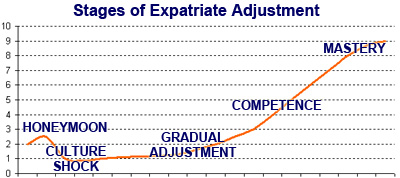
It can be defined as the difficulties in adjusting to a different country and culture. All expats experience cultural shock to some extent, although not everyone goes through it in the same way. In fact, it is possible to experience it more than once.

  • Some expats struggle during their first few weeks, until they start getting an understanding of their host country, make friends and start to settle down.
  • For some others, the emotional roller coaster is greater after they stop finding everything fascinating and wonderful. That's when adjustment problems arise, such as language issues, loneliness, etc.
  • Other expats have only experienced this after relocating several times to different countries, which might be surprising. 
What are the symptoms?

Loneliness, avoiding others, refusal to learn the language, having negative judgement and stereotypes about guest country, continuous health worries, concerns about being exploited or injured, etc.

Have you ever experienced any of this?

At a corporate level, the expatriate the rate of expats that cannot overcome culture shock is extremely high. Some sources quote a 40% rate.

Hints and tips

So, as culture shock can turn every cultural transition into a real struggle for expats, let's take a look at a few hints and tips to help you fight it back. Please feel free to share any other tips that might be useful to others!

  1. Get the basics right.
    Before you relocate, find out as much as you can about your guest culture, the area where you are going to live, means of transport, business hours, any supermarkets nearby, etc.
  2. Meet new people.
    It can be tiresome and frustrating. You have your friends and family back at home, but it is useful and fun having someone to talk to from time to time.
  3. Don't avoid locals.
    Locals can be as afraid of getting it wrong as you might be! Local can help you adjust quicker and in a more fun way.
  4. Learn the new language.
    It'll always be easier if you learn the local language, even if it's just to get by. Locals will be more appreciative and it'll be more satisfying for you.
  5. Keep in regular touch with your family and friends back at home.
    This can help you with being less lonely.
  6. Take care of yourself.
    Exercise regularly, eat well, enjoy as much as you can and smile a lot.
  7. Give yourself time to adjust.
    The emotional roller coaster that expatriates experience is normal. It takes some time and effort to adjust to a new country and culture. So, be patient with yourself! 


Thanks for reading!

Photo credit
Photo credit


30 May 2013

Technology in Insurance


This week, we wanted to focus on technology in the insurance sector. At Medibroker, we have just published our first video (please see below), and so we thought it would be useful to discuss briefly how the use of technology is changing the landscape in insurance for both insurers and policyholders.


The insurance sector is not as heavily engaged in technology and social media as other sectors may be. We need to bear in mind that we all are learning how to interact effectively with other people and companies. This also involves a change of habits, which might not be as easy nor quick to do.

However, recent research shows that times are definitely changing. Consultancy firm Deloitte has found that technology is one of the five driving market forces that they are facing. They say that customers may now want to interact with companies in more than one way. In fact, on a  different survey, it was found that a quarter of the 2,000 people surveyed said that they would be comfortable with the idea of engaging with an insurance provider on social media.

Technology has become so important, that an insurance publication has launched their own technology awards.

For expats, video is the perfect way to record their experiences to keep in touch with their loved ones back at home or to remember their life abroad. Many expat blogs have published videos where they tell us about exciting and invaluable experiences abroad.

Video is part of this boom in communications. Research company comScore report that 84.7% of the total population in US saw a video during April 2013, and the numbers keep growing up every month worldwide. So, it is not surprising that many insurers have decided to use video to explain complex insurance concepts.

In our video, we briefly explain who we are and how we can help expats and companies who are sending their employees abroad for some time. Please see below (You Tube channel coming up soon!).


At Medibroker, we aim at providing value to our customers, so please connect with us and let us know how we are doing! Have you got any comments? If you need UK or international health insurance, let us help you!

Thanks for reading.


17 April 2013

What to Do and See in Kazakhstan

Kazakhstan is attracting increasing numbers of expatriates, due to its economic development in recent yearsThe country was the largest of the Central Asian states in the former Soviet Union, and it is the world's ninth biggest country by size.

After gaining independence in 1991, Kazakhstan has used its large oil and natural gas resources to become an emergent economy. Achieving a sustainable economic growth outside oil, power and mining sectors is, as a matter of fact, one of their current issues. At the moment, it is the richest country in Central Asia and one of the most economically advanced of the so-called 'stan' states.

According to the Office for Statistics of Kazakhstan, there are about 100,000 foreigners working in the country. About 81% of them are highly qualified and have middle and top management positionsAlthough the Government has made it a priority for their citizens to be present in the workforce, the lack of specialists forces foreign investors to attract workforce from abroad. The skills in demand are technical, management and marketing.

Once there, expatriates can enjoy one of the greatest undiscovered travel destinations. Now that Sacha Baron Cohen's infamous character Borat has helped to put Kazakhstan on the map, tourism is growing in this ethnically diverse country.

However, expats need to take into account that healthcare has reportedly deteriorated since the Soviet times. Due to language issues and the fact that it is difficult to ascertain doctors' skills, foreigners tend to go to SOS clinics. Even so, comprehensive international health insurance is strongly advised to ensure adequate and un-expensive medical treatment while in the country.


What to Do and See in Kazakhstan?


Archeological sites

Central Kazakhstan has several archaeological and ethnographic sites preserved, like the Begazy burial ground. The sites are Bronze Age and Early Iron Age. There are also New Stone Age and Bronze Age settlements in the Karkarala Oasis. In addition, the Bayan-Aul National Park has rock drawings and stone sculptures.


Baikonur Cosmodrome

The Central Asian answer to Cape CaƱaveral, is located about 200 Km East of the Aral Sea. It has a small museum which includes two houses where Yuri Gagarin and Sergey Korolev used to live.


The Charyl Canyon

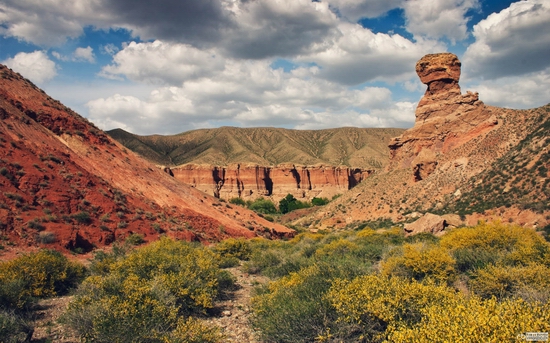
Charyn canyon, Kazakhstan wallpaper 1Also known as Castle's Valley, it has been compared to the Grand Canyon in US, due to its magnificency. It is located 200 km from the city of Amaty. It was formed some 30 million years ago, and it offers a breathtaking scenery.

In fact, the country has beautiful natural reserves that are used for hiking and water sports.


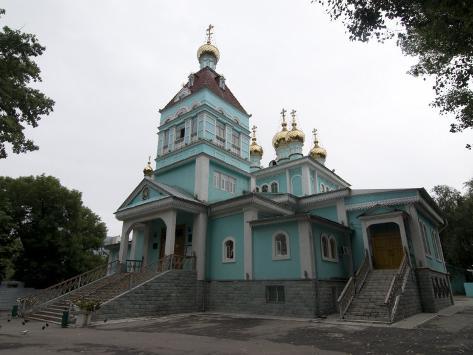
St Nicholas Church

This is a remnant of the Russian era. The Nikolski Sobar was used as stables for a while, but religious services started again 1980, long before the country's independence. 

It's turquoise walls and wooden framework is much used by the babushkas these days.


Almaty's Playground

Almaty used to be the country's capital until 1997, when Astana gained that status. The 'playground' is only a few minutes drive from Medeo, one of the most popular areas in the city, and up in the mountains at 1,700m. There are cafes, an ice rink in the winter. 


Have you got any other facts about Kazakhstan or fun things for expats to do? If so, please share them! Thank you for reading.


22 February 2012

Most expats in UAE ‘ignorant of local culture’

The majority of foreigners in the UAE have no real knowledge of Emirati culture and traditions, a recent survey has revealed.

A survey of over 2,000 expatriates carried out by the UAE's Ministry of Interior found that 60 per cent confessed to having only a "basic" knowledge about their host country's culture, with 12 per cent admitting that they knew “next to nothing”.

Although most expats (70 per cent) said that there were enough resources available to help them learn about the local culture, only a third said they set aside enough time to research it, while 11 per cent confessed they had never tried to learn at all.

This was despite the fact that the majority of expats surveyed (77 per cent) had lived in the UAE for more than a year, while more than two-fifths (43 per cent) had lived there at least five.

When it came to the UAE's religious holidays, only four in ten (39 per cent) said that they knew when they fell and what their significance was, while the majority (61 per cent) said they were "not really" aware, or knew just "some of the time".

Writing in the Ministry of Interior's magazine 999, where the results were published, Karen Remo-Listana and Emma Procter said expats' apparent "complacence" could go some way towards explaining why stories of foreigners being arrested for offences “from kissing to swearing in public flood the papers on a regular basis”.

“The survey data suggests a serious case of ignorance of the country's moral boundaries and thus explains the increasing incidents of expats falling foul of the law,” they added.

Briton Tara Rogers, managing partner of a PR company in Dubai, said that it was very easy for expats to become segregated, but that “over the years, the UAE has created a number of initiatives and programmes that offer expats an insight into Emirati culture, inviting us to share meals, visit mosques and learn about the intricacies of the culture.

“It is true that one might have to make an effort to seek them out but they are there,” she said. “I really think that on the part of expats it is a question of attitude and interest. If you are interested you will meet the most wonderful people. If you just stick to your own, you won’t – as simple as that.“

When you are working or living abroad, or have plans of relocating into another country, it is very important that you protect you and your family’s health and their wellness.

Expatriates make sure you are covered for International Medical Insurance, April Medibroker assists & advises clients living or working abroad to both choose & place the right international Health and Medical insurance products, to suit their needs & budget.

April Medibroker is here to help you - from the initial advice on what expatriate health insurance policy to buy, through to any assistance that you may need in the future. Our staff are only a phone call or email away. Whether you need changes to cover or payment, need help with a claim or have questions about your international medical insurance policy we will gladly help.