International Medical Insurance for Expatriates

Showing posts with label Expatlife. Show all posts

17 April 2013

What to Do and See in Kazakhstan

Kazakhstan is attracting increasing numbers of expatriates, due to its economic development in recent years. The country was the largest of the Central Asian states in the former Soviet Union, and it is the world's ninth biggest country by size.

After gaining independence in 1991, Kazakhstan has used its large oil and natural gas resources to become an emergent economy. Achieving a sustainable economic growth outside oil, power and mining sectors is, as a matter of fact, one of their current issues. At the moment, it is the richest country in Central Asia and one of the most economically advanced of the so-called 'stan' states.

According to the Office for Statistics of Kazakhstan, there are about 100,000 foreigners working in the country. About 81% of them are highly qualified and have middle and top management positions. Although the Government has made it a priority for their citizens to be present in the workforce, the lack of specialists forces foreign investors to attract workforce from abroad. The skills in demand are technical, management and marketing.

Once there, expatriates can enjoy one of the greatest undiscovered travel destinations. Now that Sacha Baron Cohen's infamous character Borat has helped to put Kazakhstan on the map, tourism is growing in this ethnically diverse country.

However, expats need to take into account that healthcare has reportedly deteriorated since the Soviet times. Due to language issues and the fact that it is difficult to ascertain doctors' skills, foreigners tend to go to SOS clinics. Even so, comprehensive international health insurance is strongly advised to ensure adequate and un-expensive medical treatment while in the country.


What to Do and See in Kazakhstan?


Archeological sites

Central Kazakhstan has several archaeological and ethnographic sites preserved, like the Begazy burial ground. The sites are Bronze Age and Early Iron Age. There are also New Stone Age and Bronze Age settlements in the Karkarala Oasis. In addition, the Bayan-Aul National Park has rock drawings and stone sculptures.


Baikonur Cosmodrome

The Central Asian answer to Cape CaƱaveral, is located about 200 Km East of the Aral Sea. It has a small museum which includes two houses where Yuri Gagarin and Sergey Korolev used to live.


The Charyl Canyon
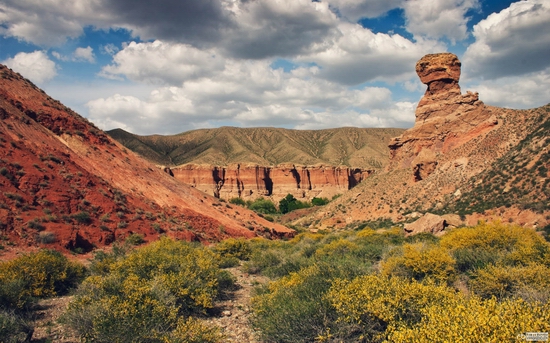
Charyn canyon, Kazakhstan wallpaper 1Also known as Castle's Valley, it has been compared to the Grand Canyon in US, due to its magnificency. It is located 200 km from the city of Amaty. It was formed some 30 million years ago, and it offers a breathtaking scenery.

In fact, the country has beautiful natural reserves that are used for hiking and water sports.


St Nicholas Church
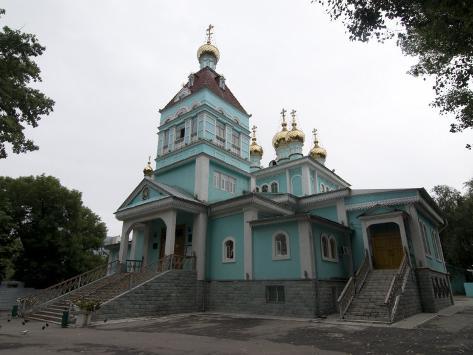
This is a remnant of the Russian era. The Nikolski Sobar was used as stables for a while, but religious services started again 1980, long before the country's independence. 

It's turquoise walls and wooden framework is much used by the babushkas these days.


Almaty's Playground

Almaty used to be the country's capital until 1997, when Astana gained that status. The 'playground' is only a few minutes drive from Medeo, one of the most popular areas in the city, and up in the mountains at 1,700m. There are cafes, an ice rink in the winter. 


Have you got any other facts about Kazakhstan or fun things for expats to do? If so, please share them! Thank you for reading.


10 April 2013

8 Reasons Why Expats Live and Work in Dubai


Dubai, like the GCC area, is now a hot spot for expatriates. Being a a state member of the UAE, a recent report by the Dubai Statistics Centre reveals a 5% increase in population over 2012 to 2.1 million.

Interestingly enough, most of them are expatriates. Given that Dubai and Abu Dhabi have ranked first and second in the best places to live in the Mena region, this is hardly a surprise. It is not surprising either that the most populated areas in the city are actually those where workers live and work.

Other estimations indicate that over a million people travelled to Dubai daily in 2012, which represents 2% more than in 2011. This number includes commuters and other people who also live in the region.  

Dubai certainly seems to be a busy area. Let’s have a look at some of the reasons why professionals live and work in Dubai.

1. Trade is thriving and employment is on the increase.

Dubai is currently an international market which is viewed in the same light as London or New York. According to Dubai's government, their international trade has been growing by an average of 11% since 1988.

Employment is also on the increase in the whole UAE. The Vice President of Sales at Bayt.com said that the GCC area’s broad mass appeal seems in the increase only. A January Job Survey showed that 67% of employers in the MENA region planned to hire during 2013.

Another interesting fact is that they don’t mix business and politics, as their trade with Iran shows.

2. Stable economy in a safe area.

The recent Consumer Confidence Index published in March showed that professionals expected their personal finances to improve during the next 6 months. It is also worth noting that salaries are tax-free and higher in some industries than in the same industries in other areas in the world.

Safety might be a concern for expats. But, Dubai is a low-crime area. Also, the fact that most of the population are professionals makes this area safer than many others.

3. Strategic location.

It is a bridge between the Far East and Europe on the East-West, and the CIS and Africa on the North-South.  Dubai boasts good infrastructure, including a solid airline carrier. This certainly helps international business, with numerous companies headquartered in the area. 

4. High-quality facilities and services.

Expats living or working in Dubai are enjoying high-quality services in most aspects of life, eg, automations of bills, etc. As IExpats.com mentions, Dubai and UAE offer a high standard of living.

Medical facilities are also good. However, expats would only enjoy this service free of charge in case of life-threatening cases or emergencies. That’s the reason why expats need international medical cover if they wish to live or work in that area. Talking to a specialist health insurance broker can only be beneficial for them.

5. Entertainment.

Business conferences aside, events and outdoor activities are easy to find. Dubai is a buzzing city, and expats feel that there is always something going on. Anything from sporting activities (there are many sports clubs available), exhibitions and music concerts can easily be found. Acts as varied as The Killers or David Guetta have played there.

6. Breath taking buildings and scenery.


Source: Palordinia

7. Multicultural society.

Expatriates can do business with and live alongside people of different areas of the world. This tiny area is a global village where expatriates learn to appreciate and live in a multicultural environment.

8. Weather.

If expats are looking for a warm, sunny place to live and work, this seems to be the one. It is warm for about eight months a year. 

Any others that you might have? Thank you for reading.

5 December 2011

New study suggests expat wealth robust in face of global recession

Expat wealth has remained largely unaffected by the global economic downturn, a report has revealed

Even in countries where economical problems have been compounded by political unrest and natural disaster, such as Bahrain, Egypt and Japan, expat finances appear resilient. As a result, the majority of expats worldwide are opting to stay in their current postings rather than return home.

The findings, revealed in HSBC Expat's 2011 Expat Explorer survey, show that while expats may have little confidence in the strength of their adopted countries' economies, their earning levels, disposable inomes and ability to accumulate luxuries remain largely unchanged.

In fact, the study shows that expats living in Bahrain, Egypt and Japan are all living to a better standard than they were accustomed to in their mother country.

"More than half of expats in Bahrain have much higher disposable incomes than they did in their home country, as well as 58 per cent of expats in Egypt and 38 per cent of expats in Japan, compared with the global average of 35 per cent", said the report.

Saudi Arabia, Egypt, Singapore, Russia and Switzerland made up the top five most lucrative expat destinations, while Italy, New Zealand, Netherlands, France and Germany were considered the least prosperous.

Despite the general affluence enjoyed by expats worldwide, countries which provide the highest expat salaries and economic rewards don't necessarily provide the best quality of life for children and families.

According to the study, made up of surveys from 3,385 expatriates from over 100 countries around the world, the most lucrative expat destinations are often those where it is hardest for families to integrate and where childcare and healthcare are lowest.

The study's Raising Children Abroad league table judges countries on the three factors considered most important for expat parents: childcare, health and wellbeing and integration, with France, the Netherlands and Australia coming out on top.

A spokesperson at HSBC Expat said: "Expats with children will obviously be putting their children's needs at the forefront of their relocation decision. For many expat parents, the knowledge that their children will be able to easily integrate into their new community will outweigh any potential increase in earnings and saving potential when moving."

When you are working or living abroad, or have plans of relocating into another country, it is very important that you protect you and your family’s health and their wellness.

Expatriates make sure you are covered for International Medical Insurance, April Medibroker assists & advises clients living or working abroad to both choose & place the right international Health and Medical insurance products, to suit their needs & budget.

April Medibroker is here to help you - from the initial advice on what expatriate health insurance policy to buy, through to any assistance that you may need in the future. Our staff are only a phone call or email away. Whether you need changes to cover or payment, need help with a claim or have questions about your international medical insurance policy we will gladly help.